
- adv.rojen@gmail.com
- Anamnagar Kathmandu

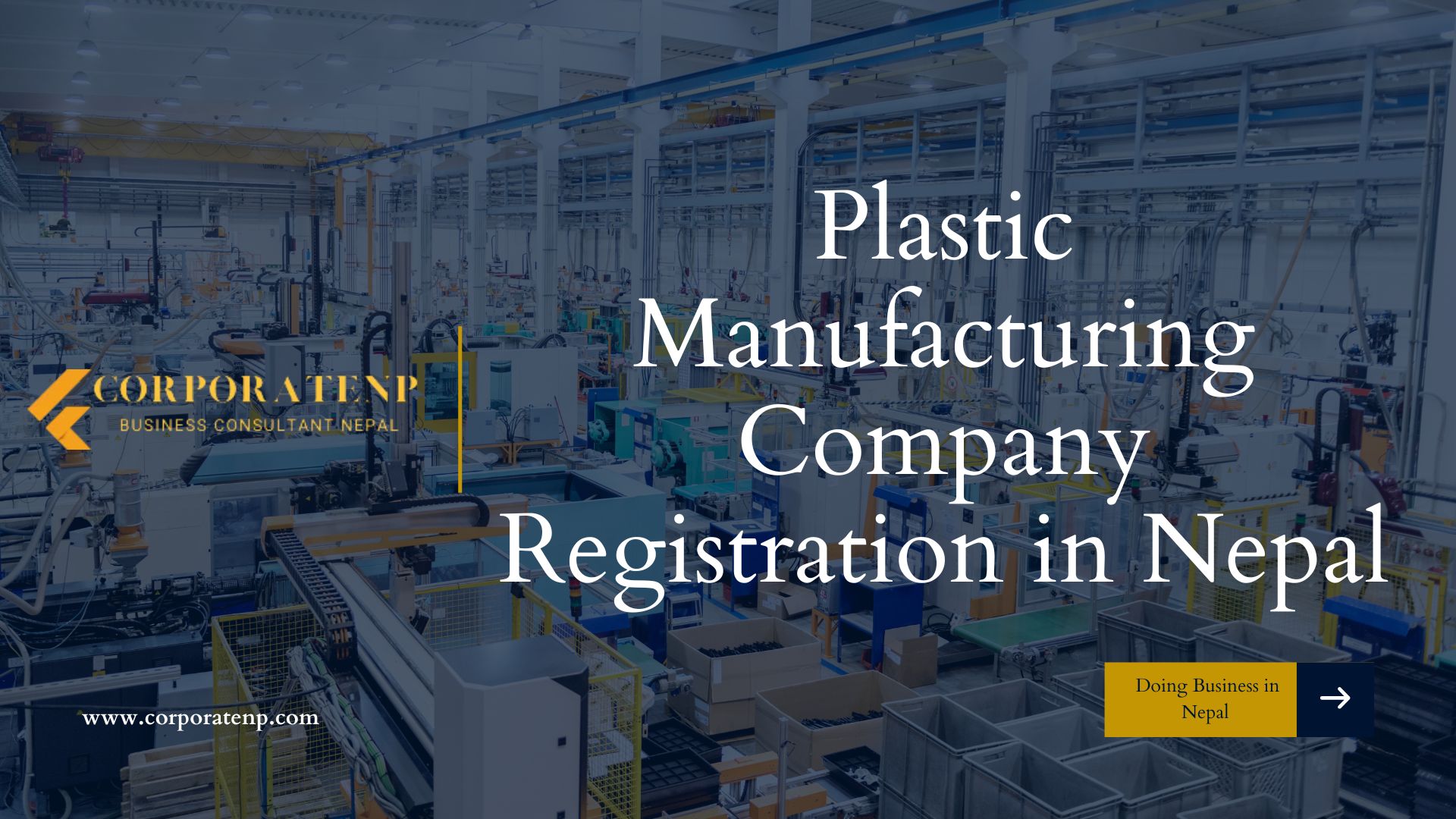
Plastic Manufacturing Company Registration in Nepal
24
Jun
Table of Contents
Plastic manufacturing company registration in Nepal is governed by multiple statutes that must be understood before any application is filed. Nepal's plastic industry serves diverse sectors including packaging, construction, agriculture, and consumer goods. Many entrepreneurs are drawn to this sector by growing domestic demand and import substitution opportunities, yet remain unaware of the specific environmental clearance, pollution control, and product safety requirements that apply to plastic production. This guide has been prepared to answer every question that is commonly asked about starting a plastic manufacturing business in Nepal.
The legal framework for plastic manufacturing company registration in Nepal is found in the Companies Act 2063, the Industrial Enterprises Act 2076, the Environmental Protection Act 2076, and various standards issued by the Department of Industry and the Department of Environment. Additionally, the Solid Waste Management Act 2068 governs plastic waste disposal, while the Nepal Bureau of Standards and Metrology enforces product quality standards.
What Is a Plastic Manufacturing Company in Nepal?
A plastic manufacturing company in Nepal is a corporate entity engaged in the production of plastic products through processes such as extrusion, injection molding, blow molding, thermoforming, or compression molding. This includes packaging films and containers, pipes and fittings, household items, industrial components, agricultural products, and construction materials. Such companies may operate as private limited companies or public limited companies depending on scale and capital requirements.
Furthermore, the sector is classified into several categories based on polymer type: polyethylene (PE) products including LDPE and HDPE; polypropylene (PP) products; polyvinyl chloride (PVC) products; polyethylene terephthalate (PET) products; and engineering plastics for specialized applications. Each category has distinct raw material sourcing, processing technology, and market channels.
Legal Framework for Plastic Manufacturing Company Registration in Nepal
The following laws and regulations govern plastic manufacturing company registration in Nepal:
| Legislation | Year | Relevance to Plastic Companies |
|---|---|---|
| Companies Act | 2063 (2006) | Governs incorporation and corporate management |
| Industrial Enterprises Act | 2076 (2020) | Industry classification and tax incentives |
| Environmental Protection Act | 2076 (2019) | Environmental clearance and pollution control |
| Solid Waste Management Act | 2068 (2011) | Plastic waste disposal and recycling |
| Factory Act | 2019 | Factory registration and safety |
| Labor Act | 2074 (2017) | Employment regulations for industrial workers |
| Value Added Tax Act | 2052 (1996) | Tax on plastic products at 13% |
| Foreign Investment and Technology Transfer Act | 2075 (2019) | Governs foreign participation |
| Nepal Bureau of Standards and Metrology Act | 2037 (1980) | Plastic product quality standards |
| Plastic Pollution Reduction Policy | Various | Government restrictions on single-use plastics |
| Biodegradable Plastic Standards | Various | NBSM specifications for eco-friendly alternatives |
Types of Plastic Manufacturing Companies in Nepal
Plastic companies may be structured in several forms:
| Company Type | Description | Primary Regulator |
|---|---|---|
| Packaging Film Manufacturer | LDPE, HDPE, PP films and bags | DOI, MoFE |
| Rigid Container Manufacturer | Bottles, jars, boxes, drums | DOI, DFTQC |
| Pipe and Fitting Manufacturer | PVC, HDPE water and drainage pipes | DOI, NBSM |
| Injection Molding Company | Household and industrial components | DOI, MoFE |
| Blow Molding Company | Hollow containers and tanks | DOI, MoFE |
| Thermoforming Company | Cups, trays, blister packs | DOI, MoFE |
| Recycling Company | Post-consumer plastic reprocessing | DOI, MoFE |
| Masterbatch Manufacturer | Color and additive concentrates | DOI |
| Construction Product Manufacturer | PVC profiles, sheets, foam boards | DOI, NBSM |
| Agricultural Product Manufacturer | Mulch films, pipes, greenhouse sheets | DOI |
Step-by-Step Process for Plastic Manufacturing Company Registration in Nepal
The plastic manufacturing company registration in Nepal process involves multiple stages across different authorities.
Step 1: Product Selection and Market Analysis
A comprehensive business plan must be prepared covering product range, polymer selection, processing technology, target market, and financial projections. Critical consideration is given to government restrictions on single-use plastics.
| Aspect | Planning Parameter |
|---|---|
| Product Category | Packaging, construction, agriculture, consumer, industrial |
| Polymer Type | PE, PP, PVC, PET, PS, or engineering plastics |
| Processing Technology | Extrusion, injection, blow, thermoforming, rotational |
| Capacity Planning | Daily, monthly, and annual output targets |
| Raw Material Sourcing | Domestic polymer supply or import |
| Market Channel | Domestic wholesale, retail, institutional, or export |
| Environmental Strategy | Recycling program, biodegradable alternatives |
Step 2: Land and Factory Selection
Proper facility selection is critical for production efficiency and environmental compliance:
| Site Factor | Requirement |
|---|---|
| Factory Space | Adequate for machinery, raw material, and finished goods storage |
| Ceiling Height | Minimum 4-5 meters for ventilation and crane clearance |
| Power Supply | Reliable three-phase electricity with adequate capacity |
| Water Supply | Sufficient for cooling and process requirements |
| Effluent Discharge | Connection to treatment facility or on-site treatment |
| Ventilation | Fume extraction for PVC and heated polymer operations |
| Fire Safety | Specialized suppression for plastic storage areas |
| Waste Storage | Segregated areas for scrap, rejects, and hazardous waste |
Step 3: Company Name Reservation at OCR
The proposed company name is reserved through the OCR e-Services Portal.
Step 4: Company Registration at OCR
The company is registered as a private limited or public limited entity. The MOA must specify plastic manufacturing and trading objectives.
| Document | Purpose |
|---|---|
| MOA and AOA | Constitutional documents |
| Promoter Identification | Citizenship or passport copies |
| Registered Office Proof | Factory lease or ownership |
| Capital Deposit Proof | Bank deposit certificate |
| PAN Application | Tax registration initiation |
Step 5: PAN and VAT Registration at IRD
Permanent Account Number registration is completed at the Inland Revenue Department. VAT registration is mandatory as plastic products are subject to 13% VAT.
Step 6: Environmental Clearance
Plastic manufacturing requires environmental clearance from the Ministry of Forests and Environment.
| Clearance Type | Applicability |
|---|---|
| Initial Environmental Examination | Small units with minimal environmental impact |
| Environmental Impact Assessment | Medium to large units with significant emissions |
| Pollution Control Consent | Air and water discharge permits |
| Hazardous Waste Authorization | For PVC and additive handling |
Step 7: Factory Registration
Registration under the Factory Act is required for industrial operations.
| Requirement | Details |
|---|---|
| Factory Layout Approval | Machinery placement and workflow design |
| Boiler Registration | If steam is used in processing |
| Electrical Installation Approval | Power connection and safety systems |
| Fire Safety Clearance | Detection, suppression, and exit systems |
| Building Completion Certificate | Structural safety verification |
Step 8: Industry Registration at DOI
Plastic manufacturing companies should register at the Department of Industry.
| Incentive | Benefit |
|---|---|
| Income Tax Exemption | 100% for 5 years, 50% for next 3 years |
| Customs Duty Concession | On imported machinery and raw materials |
| VAT Exemption | On imported capital goods |
| Export Cash Incentive | If plastic product export is pursued |
| Subsidized Loans | From designated development banks |
Step 9: NBSM Quality Certification
Plastic products must comply with Nepal Standards where applicable.
| Standard | Specification |
|---|---|
| NS 40 | PVC pipes for water supply |
| NS 41 | PVC pipes for drainage |
| NS 186 | Polyethylene water pipes |
| NS 187 | Polypropylene pipes |
| NS 302 | Plastic containers for food contact |
| NS 500 | Biodegradable plastic specifications |
| ISO 9001 | Quality management system |
Step 10: Additional Registrations
| Registration | Authority | When Required |
|---|---|---|
| Municipal Operation Permit | Local Municipality | All operations |
| Pollution Control Certificate | MoFE | For air and water discharge |
| Hazardous Waste License | MoFE | For PVC and chemical handling |
| Food Contact Approval | DFTQC | For food packaging products |
| Import License for Raw Materials | Customs/DOI | For imported polymers |
Single-Use Plastic Restrictions in Nepal
The government has implemented restrictions on certain plastic products:
| Restricted Item | Status | Effective Date |
|---|---|---|
| Plastic Bags below 40 microns | Banned | Various municipal implementations |
| Single-Use Plastic Cutlery | Restricted | Phase-wise implementation |
| Single-Use Plastic Straws | Restricted | Phase-wise implementation |
| Plastic Microbeads | Banned in cosmetics | Implemented |
| Expanded Polystyrene Food Containers | Restricted | Under consideration |
Manufacturers are encouraged to develop biodegradable alternatives and recycling programs.
Tax Obligations for Plastic Manufacturing Companies
Plastic companies are subject to the following taxes:
| Tax Type | Rate | Applicability |
|---|---|---|
| Corporate Income Tax | 25% | Standard rate |
| Corporate Income Tax (Special Industry) | 20% | If registered as special industry |
| VAT | 13% | On plastic products |
| TDS on Raw Material Purchase | 1.5% | On payments to suppliers |
| TDS on Employee Salaries | Progressive | As per Income Tax Act |
| Customs Duty | Varies | On imported polymers and machinery |
| Export Duty | 0% | Plastic product exports are duty-free |
| Environmental Levy | As prescribed | On certain plastic categories |
| Social Security Contribution | 31% total | Employer and employee shares |
Government Fees for Plastic Manufacturing Company Registration
| Fee Type | Amount (NPR) | Authority |
|---|---|---|
| Company Registration Fee | 1,000-3,000+ | OCR |
| Industry Registration | 1,000-5,000 | DOI |
| PAN Registration | Free | IRD |
| VAT Registration | Free | IRD |
| Environmental Clearance | 50,000-200,000 | MoFE |
| Factory Registration | 10,000-50,000 | Labor Office |
| NBSM Certification | 10,000-50,000 | NBSM |
| Municipal Permit | 2,000-10,000 | Local Body |
| Fire Safety Clearance | 3,000-10,000 | Fire Department |
| Pollution Control Consent | 25,000-100,000 | MoFE |
Timeline for Plastic Manufacturing Company Registration Nepal
| Stage | Duration |
|---|---|
| Product Selection and Market Analysis | 2-4 weeks |
| Land and Factory Selection | 2-4 weeks |
| Company Registration | 1-2 weeks |
| PAN/VAT Registration | 3-5 days |
| Environmental Clearance | 4-12 weeks |
| Factory Registration | 2-4 weeks |
| DOI Industry Registration | 1-2 weeks |
| NBSM Certification | 2-4 weeks |
| Additional Registrations | 1-2 weeks |
| Total Timeline | 3-5 months |
Post-Registration Compliance for Plastic Companies
After plastic manufacturing company registration in Nepal is completed, ongoing compliance is mandatory:
| Compliance | Frequency | Authority |
|---|---|---|
| DOI Renewal | Annual | DOI |
| Environmental Monitoring | Quarterly | MoFE |
| Air Emission Testing | Periodic | MoFE |
| Effluent Quality Testing | Periodic | MoFE |
| Factory Inspection | Periodic | Labor Office |
| Tax Return Filing | Annual | IRD |
| VAT Return Filing | Monthly | IRD |
| TDS Returns | Monthly | IRD |
| Annual Return Filing | Annual | OCR |
| NBSM Quality Audit | Periodic | NBSM |
| Social Security Contributions | Monthly | SSF |
| Waste Management Reporting | Annual | MoFE |
Recycling and Circular Economy Obligations
Plastic manufacturers are increasingly expected to participate in circular economy initiatives:
| Obligation | Description |
|---|---|
| Extended Producer Responsibility | Take-back programs for post-consumer products |
| Recycling Content | Minimum recycled material in new products |
| Design for Recycling | Product design enabling end-of-life recycling |
| Waste Collection Partnership | Collaboration with municipal collection systems |
| Public Awareness | Consumer education on proper disposal |
| Biodegradable Alternatives | Development and promotion of compostable options |
Foreign Investment in Plastic Companies
Foreign participation in plastic manufacturing company registration in Nepal is permitted subject to conditions:
| Aspect | Requirement |
|---|---|
| Foreign Ownership | Up to 100% in manufacturing |
| FDI Approval | Required from DOI or IBN |
| Minimum Investment | NPR 20 million (general) |
| Technology Transfer | Permitted for advanced processing technology |
| Repatriation | Allowed after tax clearance and NRB approval |
| Environmental Commitment | Compliance with national pollution standards |
Frequently Asked Questions
What is plastic manufacturing company registration in Nepal?
Plastic manufacturing company registration in Nepal is the process of establishing a legally compliant corporate entity for the production of plastic products through extrusion, injection molding, blow molding, or other processing methods, including obtaining environmental clearance, factory registration, and industry licensing.
Is environmental clearance mandatory for plastic manufacturing?
Yes, environmental clearance is mandatory for all plastic manufacturing units. The level of assessment depends on production scale and environmental impact.
What is the minimum investment for a plastic manufacturing company?
For a private limited company, the minimum paid-up capital is NPR 1,00,000. Practical investment in machinery, factory setup, and initial raw materials typically ranges from NPR 50 lakh to 10 crore depending on product range and automation level.
How long does plastic manufacturing company registration take?
The complete process including company registration, environmental clearance, factory licensing, and other permits typically takes 3 to 5 months.
What taxes apply to plastic products?
Plastic products are subject to 13% VAT. Corporate income tax is 25% generally, or 20% if registered as a special industry. Environmental levy may apply to certain categories.
Can foreigners invest in plastic companies in Nepal?
Yes, foreigners can invest in plastic manufacturing companies. Most manufacturing sectors allow 100% foreign ownership. FDI approval from DOI is required with minimum investment of NPR 20 million generally.
What single-use plastics are restricted in Nepal?
Restrictions apply to plastic bags below 40 microns thickness, single-use cutlery and straws, plastic microbeads in cosmetics, and expanded polystyrene containers. Regulations are being strengthened progressively.
What quality standards must plastic products meet?
Plastic products must comply with Nepal Standards including NS 40, NS 41 for PVC pipes, NS 186, NS 187 for polyethylene and polypropylene pipes, and NS 302 for food contact containers.
Are government subsidies available for plastic manufacturers?
Registered plastic companies can avail income tax exemptions for 5 years, customs duty concessions on imported machinery, VAT exemptions on capital goods, and subsidized loans from development banks.
What recycling obligations apply to plastic manufacturers?
Manufacturers are encouraged to implement extended producer responsibility, use recycled content, design for recyclability, partner with waste collection systems, and develop biodegradable alternatives.
Why Choose CorporateNp for Plastic Manufacturing Company Registration Nepal?
Plastic manufacturing company registration in Nepal involves navigating environmental regulations, pollution control requirements, factory safety standards, product quality certification, and complex documentation. CorporateNp provides comprehensive advisory and execution services to ensure your plastic company is registered smoothly and operates in full compliance.
Our services include:
- Product selection and market analysis
- Environmental impact assessment preparation
- Company registration at OCR
- Factory registration and safety compliance
- DOI industry registration for incentives
- PAN, VAT, and tax registration
- NBSM quality certification support
- Pollution control consent coordination
- Municipal and fire safety licensing
- Recycling program design and implementation
- Ongoing regulatory and compliance advisory
Contact CorporateNp today to begin your plastic manufacturing company registration in Nepal journey with confidence.
References
For official verification and further reading, the following authoritative sources are referenced:
- Department of Industry Nepal - Industry registration and incentives
- Office of Company Registrar Nepal - Company registration
- Inland Revenue Department Nepal - Tax registration and compliance
- Ministry of Forests and Environment - Environmental clearance
- Nepal Bureau of Standards and Metrology - Plastic product standards
- Ministry of Labor Employment and Social Security - Factory and labor regulations
- Ministry of Finance Nepal - Tax policy
- Department of Environment - Pollution control
- Solid Waste Management Technical Support Centre - Waste management guidelines
- Nepal Plastic Manufacturers Association - Industry coordination
- Plastics Europe - Global plastics industry standards
- UN Environment Programme - Global plastic pollution initiatives
Disclaimer: This article is provided solely for informational and educational purposes. It does not constitute legal advice, professional counsel, or solicitation. The information presented herein is based on laws and regulations as of June 2026 and may be subject to change. Readers are advised to consult qualified legal professionals before making any decisions related to plastic manufacturing company registration in Nepal. CorporateNp and its affiliates shall not be held liable for any actions taken based on the contents of this guide.