
- adv.rojen@gmail.com
- Anamnagar Kathmandu

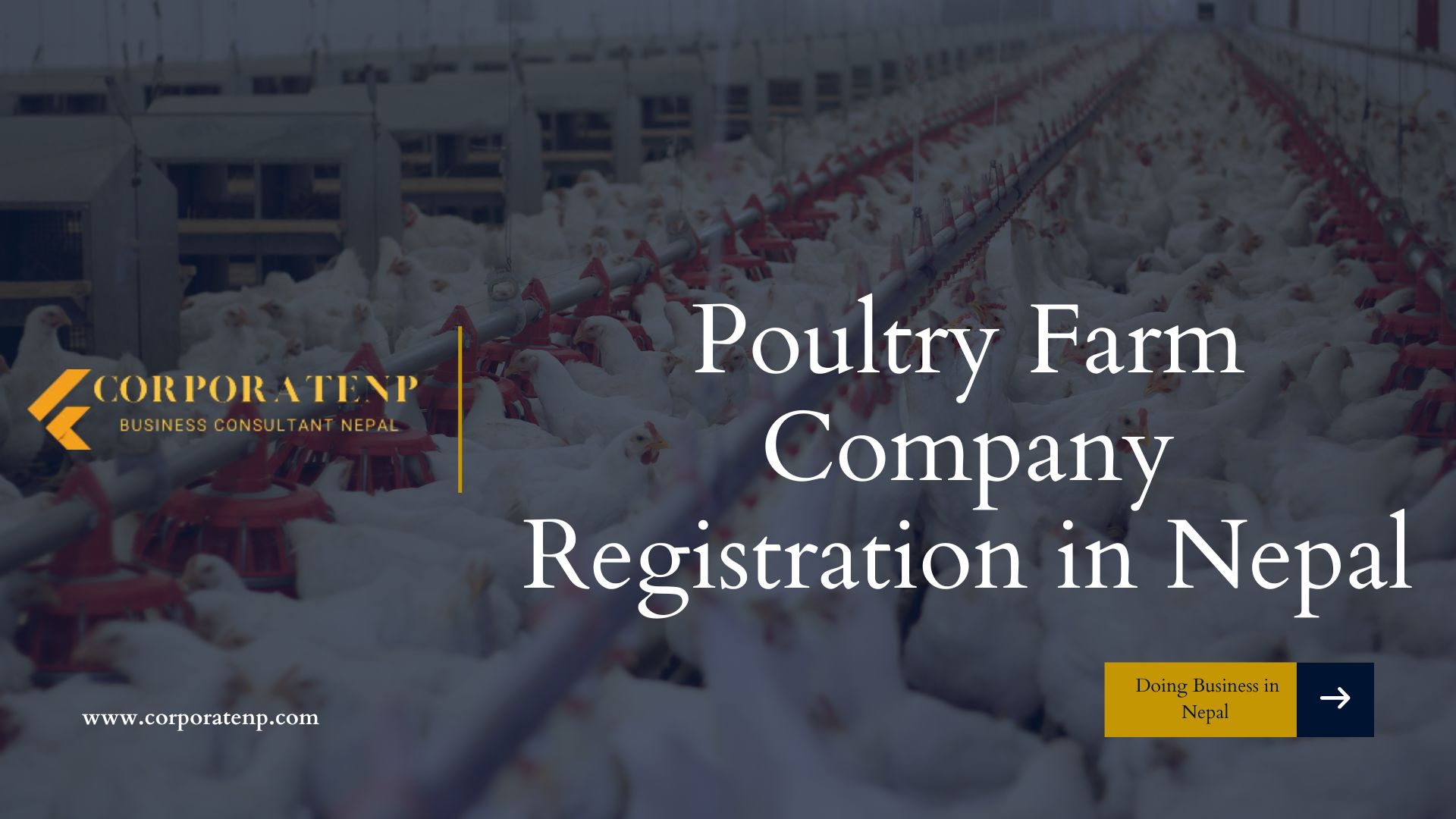
Poultry Farm Company Registration in Nepal
20
Jun
Table of Contents
Poultry farm company registration in Nepal is governed by multiple statutes that must be understood before any application is filed. The poultry sector is one of Nepal's fastest-growing agro-industries, driven by rising demand for eggs and broiler meat. Yet many entrepreneurs are unaware of the specific licensing requirements that apply to commercial poultry operations. This guide has been prepared to answer every question that is commonly asked about starting a poultry farm business in Nepal.
The legal framework for poultry farm company registration in Nepal is found in the Companies Act 2063, the Animal Health and Livestock Services Act 2055, the Industrial Enterprises Act 2076, and various standards issued by the Department of Livestock Services (DLS). Additionally, the Department of Food Technology and Quality Control (DFTQC) oversees processing and meat quality, while municipal authorities regulate farm location and environmental compliance.
What Is a Poultry Farm Company in Nepal?
A poultry farm company in Nepal is a corporate entity engaged in the commercial breeding, raising, and processing of poultry birds for egg production, meat production, or both. This includes broiler farms for meat, layer farms for eggs, hatcheries for chick production, and feed manufacturing operations. Poultry companies may operate as private limited companies, cooperatives, or sole proprietorships depending on scale.
Furthermore, the poultry sector in Nepal is classified into backyard farming for household consumption, small commercial farms with 200-2,000 birds, medium commercial farms with 2,000-10,000 birds, and large integrated operations with 10,000+ birds. Each category has distinct registration, licensing, and bio-security requirements.
Legal Framework for Poultry Farm Company Registration in Nepal
The following laws and regulations govern poultry farm company registration in Nepal:
| Legislation | Year | Relevance to Poultry Companies |
|---|---|---|
| Companies Act | 2063 (2006) | Governs incorporation and management |
| Animal Health and Livestock Services Act | 2055 (1998) | Governs poultry health and farm standards |
| Industrial Enterprises Act | 2076 (2020) | Industry classification and incentives |
| Food Act | 2023 | Governs meat and egg safety standards |
| Environmental Protection Act | 2076 (2019) | Environmental compliance for large farms |
| Value Added Tax Act | 2052 (1996) | Tax on poultry products |
| Foreign Investment and Technology Transfer Act | 2075 (2019) | Governs foreign participation |
| Poultry Farm Bio-Security Guidelines | Various | DLS disease prevention standards |
| National Avian Influenza Preparedness Plan | Various | H5N1 prevention and response |
Types of Poultry Farm Companies in Nepal
Poultry companies may be structured in several forms:
| Company Type | Description | Regulator |
|---|---|---|
| Broiler Farm Company | Meat chicken production | DLS, Municipality |
| Layer Farm Company | Egg production | DLS, Municipality |
| Hatchery Company | Day-old chick production | DLS |
| Poultry Feed Company | Manufactured feed production | DLS, DFTQC |
| Processing Company | Slaughter and meat packaging | DFTQC, DLS |
| Integrated Poultry Company | Farm-to-table operations | DLS, DFTQC, Municipality |
| Breeding Farm Company | Parent stock production | DLS |
Step-by-Step Process for Poultry Farm Company Registration in Nepal
The poultry farm company registration in Nepal process involves multiple stages across different authorities.
Step 1: Business Plan and Feasibility Study
A comprehensive business plan must be prepared covering farm capacity, breed selection, feed sourcing, bio-security protocols, market analysis, and financial projections. The feasibility study should assess land requirements, labor needs, vaccination schedules, and mortality risk factors.
Step 2: Land and Location Selection
Poultry farm location must comply with municipal zoning and DLS bio-security guidelines:
| Location Requirement | Standard |
|---|---|
| Distance from Residential Areas | Minimum 500 meters for large farms |
| Distance from Water Bodies | Minimum 100 meters |
| Distance from Other Poultry Farms | Minimum 1-3 kilometers (bio-security zones) |
| Road Access | All-weather road for feed and product transport |
| Water Availability | Sufficient for drinking and cleaning |
| Electricity | Reliable power for ventilation and lighting |
| Drainage | Proper waste and effluent disposal |
Step 3: Company Name Reservation at OCR
The proposed company name is reserved through the OCR e-Services Portal. Names reflecting poultry, agro, or livestock nature are commonly used.
Step 4: Company Registration at OCR
The company is registered as a private limited or public limited entity. The MOA must specify poultry farming, breeding, feed production, or processing objectives.
| Document | Purpose |
|---|---|
| MOA and AOA | Constitutional documents |
| Promoter Identification | Citizenship or passport copies |
| Registered Office Proof | Lease or ownership of farm land |
| Capital Deposit Proof | Bank deposit certificate |
| PAN Application | Tax registration initiation |
Step 5: PAN and VAT Registration at IRD
Permanent Account Number registration is completed at the Inland Revenue Department. VAT registration is required if annual turnover exceeds NPR 5 million.
Step 6: DLS Poultry Farm Registration
The Department of Livestock Services registration is mandatory for all commercial poultry farms. The application requires:
| Document | Purpose |
|---|---|
| Farm Registration Application | Formal request to DLS |
| Company Registration Certificate | Legal entity proof |
| Land Ownership or Lease | Farm premises verification |
| Farm Layout Plan | Shed design, ventilation, drainage |
| Bio-Security Plan | Disease prevention protocols |
| Vaccination Schedule | Recommended immunization program |
| Waste Management Plan | Litter and mortality disposal |
| Water Source Details | Potability and adequacy |
| Feed Source Information | Commercial or self-mixed feed |
| Staff Health Records | Medical fitness of workers |
Step 7: DLS Inspection and Approval
DLS veterinary officers conduct a site inspection to verify:
| Inspection Aspect | Standard |
|---|---|
| Shed Construction | Proper ventilation, insulation, lighting |
| Bird Density | Maximum 10-15 birds per square meter (broilers) |
| Feed and Water Systems | Clean, accessible, adequate |
| Bio-Security Measures | Foot baths, vehicle disinfection, visitor control |
| Mortality Disposal | Deep burial or incineration facilities |
| Manure Management | Composting or biogas utilization |
| Disease History | No recent outbreaks in vicinity |
| Record Keeping | Daily mortality, feed consumption, egg production |
Step 8: Municipal Operation Permit
Local municipality permission is required for commercial poultry operations. Environmental impact may be assessed for large farms.
Step 9: Environmental Clearance (If Applicable)
Poultry farms with capacity above prescribed thresholds require environmental clearance from the Ministry of Forests and Environment.
Step 10: Industry Registration at DOI
Poultry companies with significant fixed capital should register at the Department of Industry to avail tax incentives and subsidized loans.
| Incentive | Benefit |
|---|---|
| Income Tax Exemption | 100% for 5 years, 50% for next 3 years |
| Customs Duty Concession | On imported breeding stock and equipment |
| VAT Exemption | On imported capital goods |
| Subsidized Loans | From agricultural development banks |
| Insurance Subsidy | On poultry stock and infrastructure |
Step 11: Additional Licenses for Processing
If the poultry company engages in slaughtering and meat processing, DFTQC food industry license is additionally required.
Bio-Security Standards for Poultry Farms in Nepal
DLS enforces strict bio-security protocols:
| Bio-Security Measure | Implementation |
|---|---|
| Perimeter Fencing | Secure farm boundary |
| Controlled Entry | Single entry point with foot bath |
| Vehicle Disinfection | Spray disinfection for all vehicles |
| Visitor Log | Record of all visitors and purpose |
| Quarantine Area | Isolation facility for new birds |
| All-In All-Out System | Complete depopulation between batches |
| Rodent and Pest Control | Regular baiting and trapping |
| Wild Bird Deterrents | Nets and scaring devices |
| Vaccination Compliance | Mandatory Newcastle, IB, Gumboro vaccines |
| Mortality Monitoring | Daily recording and investigation |
Tax Obligations for Poultry Farm Companies in Nepal
Poultry companies are subject to the following taxes:
| Tax Type | Rate | Applicability |
|---|---|---|
| Corporate Income Tax | 25% | Standard rate |
| Corporate Income Tax (Special Industry) | 20% | If registered as special industry |
| VAT | 13% | On eggs, meat, and processed products |
| TDS on Feed Purchase | 1.5% | On commercial feed payments |
| TDS on Employee Salaries | Progressive | As per Income Tax Act |
| Agricultural Income Tax | Exempt | For primary farming (conditions apply) |
Government Fees for Poultry Farm Company Registration
| Fee Type | Amount (NPR) | Authority |
|---|---|---|
| Company Registration Fee | 1,000-3,000+ | OCR |
| DLS Farm Registration | 1,000-5,000 | DLS |
| PAN Registration | Free | IRD |
| VAT Registration | Free | IRD |
| Municipal Permit | 2,000-10,000 | Local Body |
| Environmental Clearance | Varies | MoFE |
| Industry Registration | 1,000-5,000 | DOI |
| DFTQC License (if processing) | 5,000-25,000 | DFTQC |
Timeline for Poultry Farm Company Registration Nepal
| Stage | Duration |
|---|---|
| Business Plan and Land Selection | 2-4 weeks |
| Company Registration | 1-2 weeks |
| PAN/VAT Registration | 3-5 days |
| DLS Application and Inspection | 2-4 weeks |
| Municipal Permit | 1-2 weeks |
| DOI Industry Registration | 1-2 weeks |
| Additional Licenses | 1-2 weeks |
| Total Timeline | 2-3 months |
Post-Registration Compliance for Poultry Farm Companies
After poultry farm company registration in Nepal is completed, ongoing compliance is mandatory:
| Compliance | Frequency | Authority |
|---|---|---|
| DLS Farm Renewal | Annual | DLS |
| Veterinary Inspections | Periodic | DLS |
| Disease Reporting | Immediate | DLS |
| Vaccination Records | Per batch | DLS |
| Tax Return Filing | Annual | IRD |
| VAT Return Filing | Monthly/Bi-monthly | IRD |
| TDS Returns | Monthly | IRD |
| Annual Return Filing | Annual | OCR |
| DOI Reporting | Annual | DOI |
| Environmental Monitoring | As prescribed | MoFE |
Frequently Asked Questions
What is poultry farm company registration in Nepal?
Poultry farm company registration in Nepal is the process of establishing a legally compliant corporate entity for commercial poultry breeding, raising, and processing, including obtaining DLS farm registration and other mandatory permits.
Is DLS registration mandatory for poultry farms?
Yes, commercial poultry farms must be registered with the Department of Livestock Services. Backyard farms with very small numbers may be exempt but are encouraged to register.
What is the minimum investment for a poultry farm company?
For a private limited company, the minimum paid-up capital is NPR 1,00,000. Practical investment in sheds, equipment, and initial stock typically ranges from NPR 10 lakh to 2 crore depending on scale.
How long does poultry farm company registration take?
The complete process including company registration, DLS licensing, and other permits typically takes 2 to 3 months.
What taxes apply to poultry products in Nepal?
Poultry products are subject to 13% VAT. Corporate income tax is 25% generally, or 20% if registered as a special industry. Primary agricultural income may be exempt under certain conditions.
Can foreigners invest in poultry companies in Nepal?
Yes, foreigners can invest in poultry processing and manufacturing. Primary poultry farming may face restrictions under FITTA negative list provisions for agricultural activities.
What bio-security measures are required?
DLS mandates perimeter fencing, controlled entry, vehicle disinfection, visitor logs, quarantine areas, all-in all-out systems, rodent control, wild bird deterrents, vaccination compliance, and mortality monitoring.
What happens if avian influenza is detected?
Immediate reporting to DLS is mandatory. Infected farms are quarantined, birds are culled with compensation, and surrounding farms are monitored. National Avian Influenza Preparedness Plan protocols are activated.
Are government subsidies available for poultry farms?
Yes, registered poultry companies can avail income tax exemptions, customs duty concessions on imported equipment, VAT exemptions, subsidized loans, and insurance subsidies.
What is the ideal farm size for commercial poultry production?
Commercial viability typically begins at 2,000 birds for layers and 5,000 birds for broilers. Integrated operations with hatcheries and feed mills require significantly higher investment.
Why Choose CorporateNp for Poultry Farm Company Registration Nepal?
Poultry farm company registration in Nepal involves navigating multiple regulators, strict bio-security standards, and complex documentation requirements. CorporateNp provides comprehensive advisory and execution services to ensure your poultry company is registered smoothly and operates in full compliance.
Our services include:
- Business plan and feasibility study preparation
- Land selection and zoning compliance assessment
- Company registration at OCR
- DLS poultry farm registration application
- Bio-security plan development
- PAN, VAT, and tax registration
- Industry registration at DOI for incentives
- Municipal and environmental licensing
- DFTQC processing license (if applicable)
- Ongoing compliance and audit support
Contact CorporateNp today to begin your poultry farm company registration in Nepal journey with confidence.
References
For official verification and further reading, the following authoritative sources are referenced:
- Department of Livestock Services - Poultry farm registration and standards
- Office of Company Registrar Nepal - Company registration
- Inland Revenue Department Nepal - Tax registration and compliance
- Department of Industry Nepal - Industry registration and incentives
- Department of Food Technology and Quality Control - Meat processing standards
- Ministry of Agriculture and Livestock Development - Agricultural policy
- Ministry of Forests and Environment - Environmental clearance
- Ministry of Finance Nepal - Tax policy
- Nepal Poultry Federation - Industry coordination
- Food and Agriculture Organization - Global poultry standards
Disclaimer: This article is provided solely for informational and educational purposes. It does not constitute legal advice, professional counsel, or solicitation. The information presented herein is based on laws and regulations as of June 2026 and may be subject to change. Readers are advised to consult qualified legal professionals before making any decisions related to poultry farm company registration in Nepal. CorporateNp and its affiliates shall not be held liable for any actions taken based on the contents of this guide.